
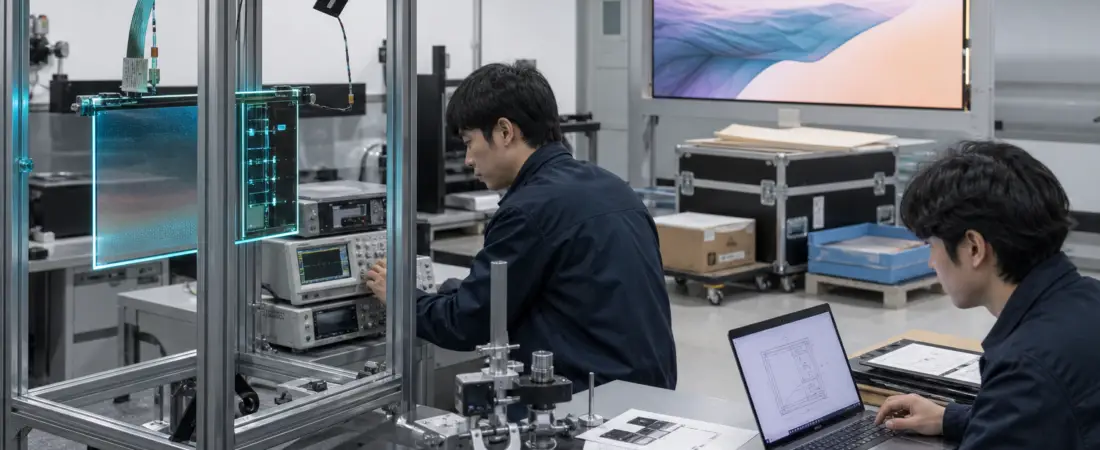
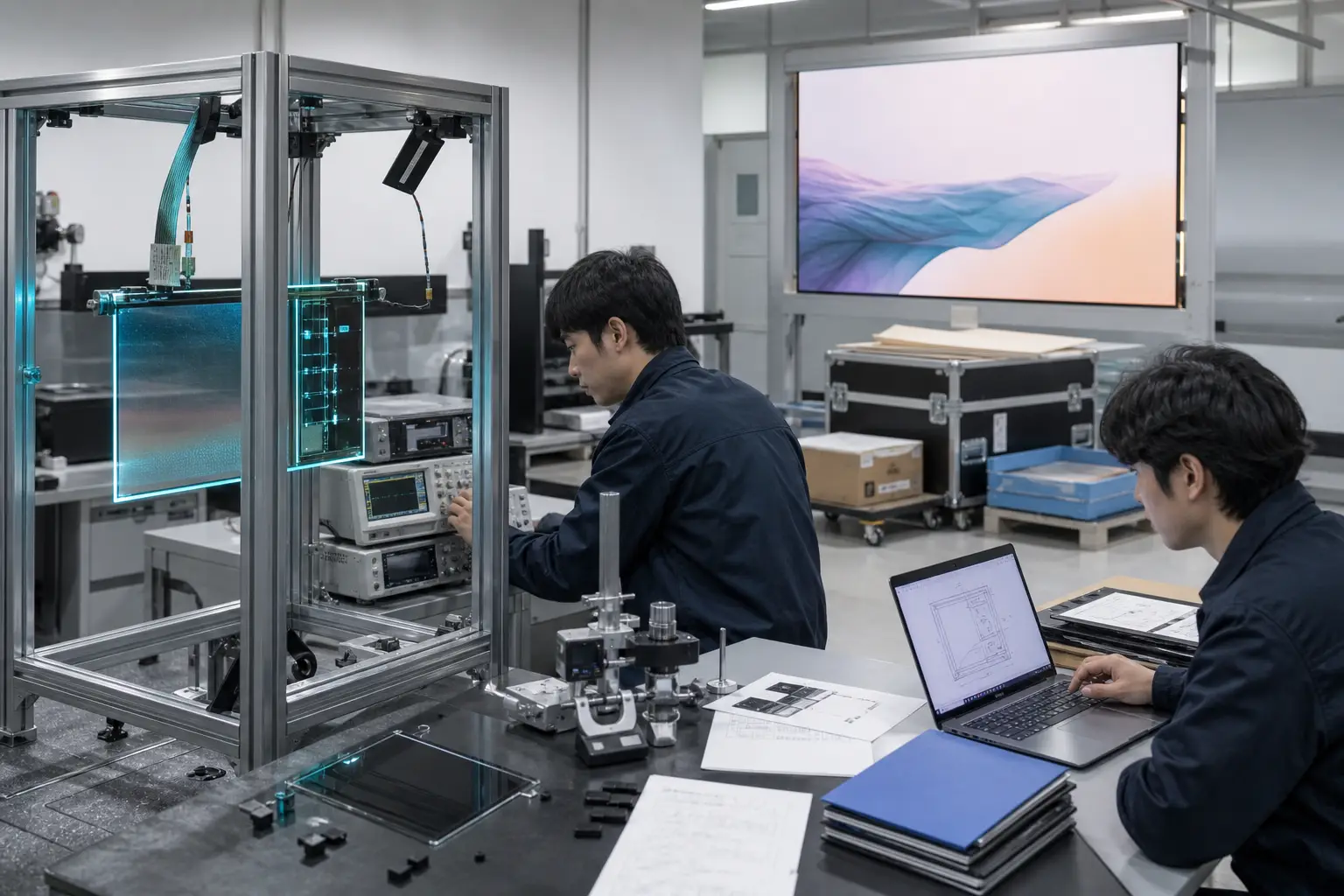
A clear Transparent OLED project workflow connects creative intent with engineering, validation, production and installation. Defined stages help every partner understand which decisions are open, which details are approved and what information is needed next.
Stage 1: Requirement discovery
The process begins with the application: where the system will be installed, what visitors should experience and which technical constraints matter. Useful inputs include dimensions, orientation, quantity, content source, interaction requirements, target schedule and reference images.
Stage 2: Solution definition
The team evaluates the Transparent OLED format, overall structure, mounting approach, computing hardware, connectivity and optional interactive components. The objective is to turn the creative idea into a technically clear direction.
Stage 3: Mechanical and visual development
The enclosure, finish, cable path, protective elements and installation interfaces are developed around the chosen configuration. Visual proportions and material choices are reviewed together with practical considerations such as service access and transport.
Stage 4: Prototype and key-detail validation
Depending on project scope, validation may include drawings, material samples, a functional prototype or review of critical mechanical and visual details. This allows the project team to confirm assumptions before production coordination.
Stage 5: Content and system preparation
Content resolution, orientation, playback method and interface requirements should be confirmed before delivery. If a computer, sensor, camera or external control system is involved, connection responsibilities and test conditions should be documented.
Stage 6: Production and quality coordination
Approved information is translated into production requirements. The project team coordinates components, assembly, functional checks and packaging based on the confirmed configuration and delivery conditions.
Stage 7: Delivery and installation support
Documentation, packing information and remote technical communication help the local partner prepare for installation. A clear division of responsibilities is especially important when the display is integrated into furniture, architecture or a wider control system.
Keep decisions visible
The strongest workflow is a shared record of requirements, approvals and responsibilities. Clear project information helps designers, engineers, suppliers and installers work toward the same result.
AI-TOLED supports project-based Transparent OLED integration from initial review through delivery coordination. Start a project conversation.
Define approval points in the Transparent OLED project workflow
Each stage should end with a visible approval point. Requirement discovery confirms the project brief. Solution definition confirms the selected configuration. Mechanical development confirms dimensions and integration interfaces. Validation confirms the agreed visual and functional details before production coordination begins.
Approval records do not need to be complicated. A dated drawing, annotated image or short requirement table can provide enough clarity. The important point is that all parties are working from the same revision.
Coordinate content, hardware and installation
Transparent display projects are most efficient when content and hardware decisions progress together. The content team needs the display area, orientation and playback specification. The engineering team needs to understand whether the experience includes live data, touch, sensors or external software. The installation team needs final dimensions, power requirements, cable routes and service access.
During the Transparent OLED project workflow, assign one owner for each interface. This is especially useful when local contractors, furniture manufacturers or system integrators are involved. Clear ownership reduces last-minute assumptions at the installation site.
Prepare for delivery before production finishes
- Confirm the delivery address, access restrictions and receiving contact.
- Review packaging dimensions and handling requirements.
- Prepare power, network and content equipment at the site.
- Confirm who will assemble, commission and test the system.
- Keep approved drawings and connection information available.
Transparent OLED project workflow FAQ
Is a physical prototype required for every project?
Not always. The validation method depends on customization complexity, quantity and risk. Some projects can be confirmed through drawings and component samples, while others benefit from a functional prototype.
What should be tested before delivery?
Typical checks include display operation, content playback, interfaces, physical assembly and the agreed functional requirements. Project-specific tests should be defined during solution development.
What support is available for installation?
Documentation and remote technical communication can be coordinated according to the project scope. Local installation responsibilities should be confirmed before delivery.
See the AI-TOLED solution workflow and Transparent OLED product options, then contact our team with your application requirements.