
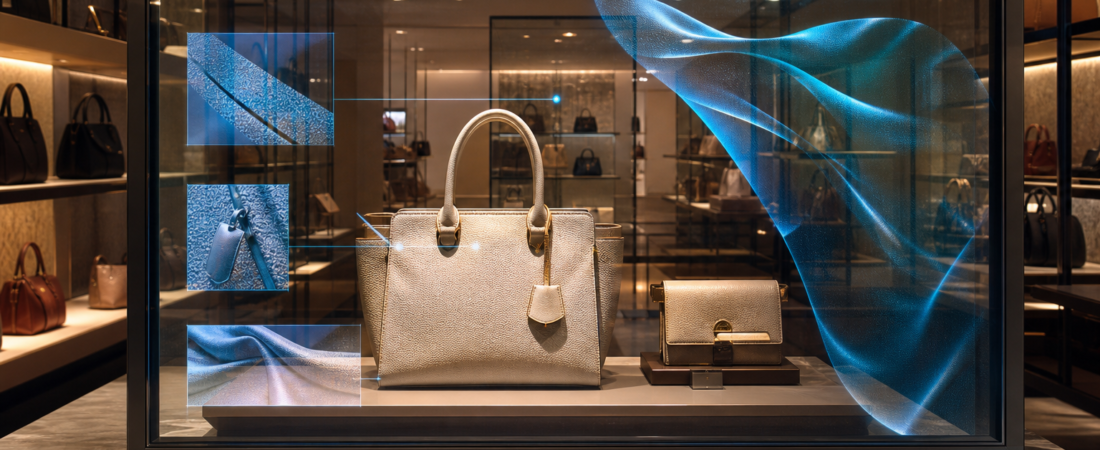
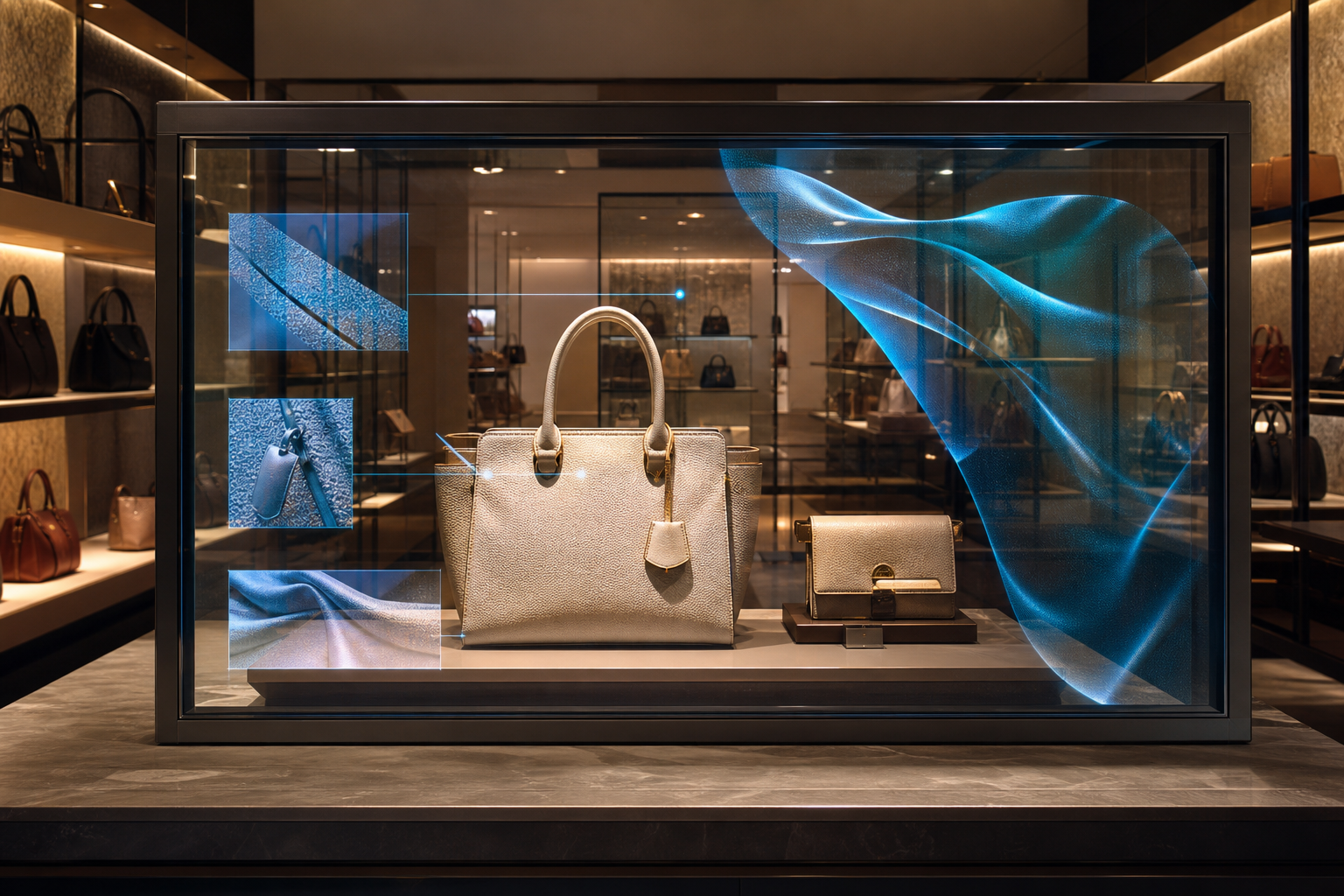
A Transparent OLED retail display adds digital storytelling without hiding the merchandise or the surrounding store. The transparent screen becomes a visual layer that can frame products, reveal details and guide customer attention.
Use digital content as a layer
The most effective retail Transparent OLED concepts treat digital content as an additional visual layer rather than a replacement for the product. Motion graphics can frame an item, reveal design details, introduce a collection or guide attention without covering the entire view.
Product-story showcases
A transparent display positioned in front of a physical product can connect features, materials and brand storytelling directly to the object. This format is suitable for watches, jewelry, fashion accessories, consumer electronics, cosmetics and other products where physical appearance still matters.
Window and in-store installations
Transparent OLED systems can be considered for window-facing displays, freestanding installations, counters and custom furniture. The correct approach depends on viewing distance, background conditions, ambient light, structural requirements and how visitors move through the space.
Content designed for transparency
Transparent-display content benefits from strong contrast, controlled use of bright elements and clear visual hierarchy. Purpose-built graphics generally create a more convincing connection between digital and physical elements.
Interaction and customer experience
Touch, proximity sensors or connected software can be evaluated when the project needs a more active customer journey. An interaction might reveal product variations, launch an animation, compare specifications or connect with a wider retail system.
Design the system as part of the store
The enclosure, base, protective structure, cabling and finish influence whether a Transparent OLED installation feels integrated or temporary. These elements should be developed alongside the display and content instead of being treated as an afterthought.
A practical starting point
Begin with one clear customer objective: attract attention, explain a product, support selection or create a memorable visual moment. From there, the display format, structure, content and interaction can be planned around the intended experience.
AI-TOLED develops transparent display products and customized systems for retail applications. Discuss your retail concept with our team.
Choose the right Transparent OLED retail display format
The best format depends on the product, customer path and available space. A desktop showcase can support close viewing of smaller items, while a freestanding portrait display can create a stronger visual landmark. Window applications require careful review of ambient light, viewing direction and the distance between the transparent display and physical merchandise.
Plan the background as part of the experience. A controlled, darker background can improve perceived contrast, while a bright or visually busy environment may require simpler graphics and stronger highlights. Product placement should leave enough separation for the digital and physical layers to remain readable.
Create content for transparent presentation
A Transparent OLED retail display should not simply reuse content made for a conventional screen. Begin with transparent areas, high-contrast accents and motion that directs attention toward the product. Short sequences often work better than dense information. Product names, feature callouts and animated lines should remain large enough to read from the expected viewing distance.
Test the content on the real display before final approval. Colors, black levels and fine details can appear different when the customer can see the environment through the screen. A short on-device review helps the creative team adjust contrast and pacing.
Connect the experience to a customer objective
- Use motion to attract visitors from the aisle or storefront.
- Explain materials, craftsmanship or product functions.
- Show variants without placing every physical item on display.
- Guide customers toward a consultation or purchase action.
- Create a memorable launch or seasonal presentation.
Transparent OLED retail display FAQ
Can the display be integrated into furniture?
Yes. Counter, cabinet and showcase integration can be evaluated with the required dimensions, ventilation, service access and finish.
Can retail content be updated?
The update method depends on the selected media player or computer. Local, networked and externally controlled workflows can be considered during system planning.
Is touch always necessary?
No. Many retail experiences are effective as carefully designed non-touch visual stories. Interaction should support a clear customer need rather than being added by default.
Explore our Transparent OLED display formats and retail solution approach, or contact AI-TOLED to review a store concept.